


Erasmus Grasser was a sculptor who was very active in Munich and Bavaria in the second half of the 15th century. He is notably credited with the effigies adorning the stalls in Munich's Frauenkirche.
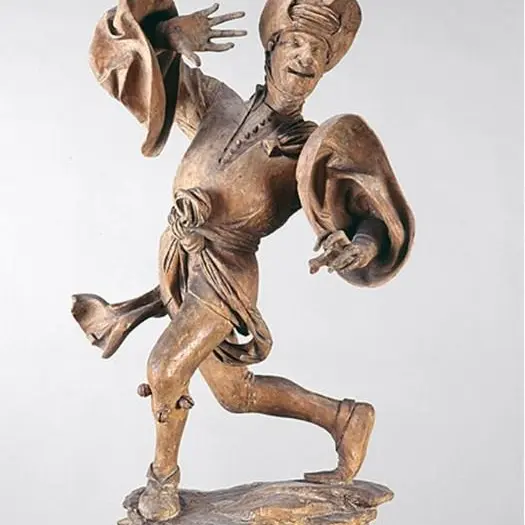
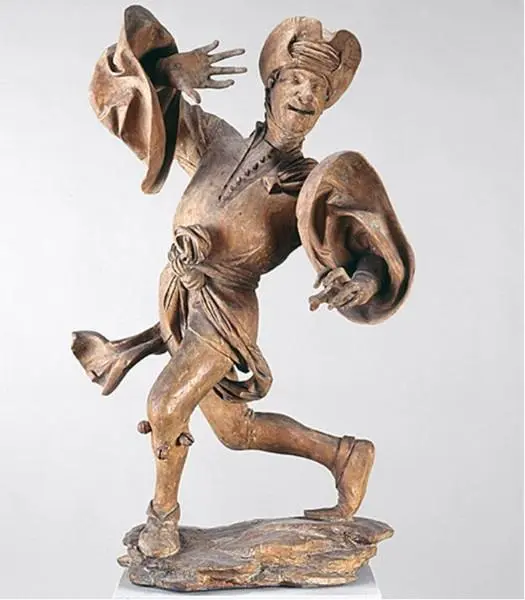
But the artist's most famous work is undoubtedly the group of Morisco (or Moorish) dancers he produced around 1480 to decorate the great hall of the town hall in the capital of Bavaria. The picturesque nature of these figures, and their eccentric, contorted poses, made this ensemble extremely popular.
This series of truculent figures also provides an opportunity to explore a type of dance that was widely practised in the late Middle Ages, particularly in the princely courts of Europe: the Morisco dance. The outré and excessive gestures of these performances, accompanied by equally expressive music, and their festive, lively and vehement, even impertinent character, radically different from traditional choreography, struck a chord with contemporaries. There is ample evidence of this fascination in manuscripts and works of art.
Moorish dance tells the story of a cultural evolution in Europe at the end of the Middle Ages, between tradition, exoticism and transgression.
But the artist's most famous work is undoubtedly the group of Morisco (or Moorish) dancers he produced around 1480 to decorate the great hall of the town hall in the capital of Bavaria. The picturesque nature of these figures, and their eccentric, contorted poses, made this ensemble extremely popular.
This series of truculent figures also provides an opportunity to explore a type of dance that was widely practised in the late Middle Ages, particularly in the princely courts of Europe: the Morisco dance. The outré and excessive gestures of these performances, accompanied by equally expressive music, and their festive, lively and vehement, even impertinent character, radically different from traditional choreography, struck a chord with contemporaries. There is ample evidence of this fascination in manuscripts and works of art.
Moorish dance tells the story of a cultural evolution in Europe at the end of the Middle Ages, between tradition, exoticism and transgression.
Opening times
Opening times
On 9 December 2025
- 18:30
On 11 December 2025
- 20:00