


Edgar Degas (1834 - 1917) was a famous painter, one of the best-known members of the so-called Impressionist movement. His nudes, depictions of dancers and horseback-riding scenes established his reputation.
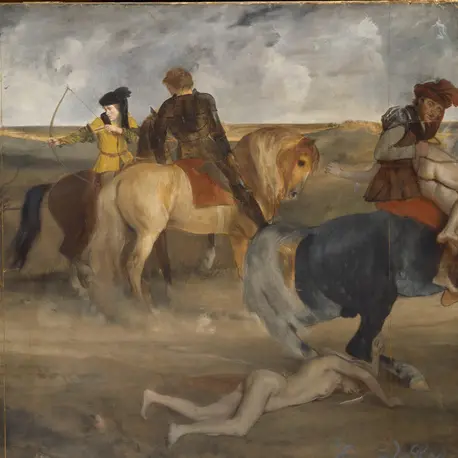
What is less well known is that before joining the Impressionist group - to which he never fully subscribed, except in solidarity with the avant-garde - Degas worked in the field of history painting. This was traditionally the highest level on the scale of pictorial genres, and it is understandable that the young man, who came from a rather conservative background, should have submitted to such a discipline.
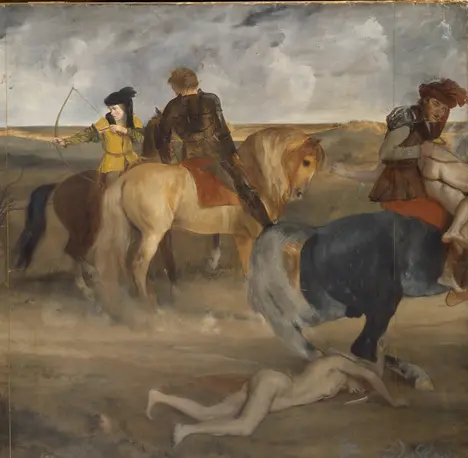
Between 1860 and 1865, the artist produced several paintings evoking episodes from the past, taken from the Bible, Antiquity or the Middle Ages. In these compositions, Degas showed his attachment to the great references derived from his study of the Old Masters, which he had been able to copy in the Louvre or in Italy, as well as to certain contemporary painters whose work he esteemed. But we can already sense in these canvases the "modern" accents that would be taken up in his later compositions, where this time he would focus on completely different subjects, chosen from the world unfolding before his eyes. This early period in Degas's career functioned as a laboratory for the innovations to come.
What is less well known is that before joining the Impressionist group - to which he never fully subscribed, except in solidarity with the avant-garde - Degas worked in the field of history painting. This was traditionally the highest level on the scale of pictorial genres, and it is understandable that the young man, who came from a rather conservative background, should have submitted to such a discipline.
Between 1860 and 1865, the artist produced several paintings evoking episodes from the past, taken from the Bible, Antiquity or the Middle Ages. In these compositions, Degas showed his attachment to the great references derived from his study of the Old Masters, which he had been able to copy in the Louvre or in Italy, as well as to certain contemporary painters whose work he esteemed. But we can already sense in these canvases the "modern" accents that would be taken up in his later compositions, where this time he would focus on completely different subjects, chosen from the world unfolding before his eyes. This early period in Degas's career functioned as a laboratory for the innovations to come.
Opening times
Opening times
On 27 January 2026
- 18:30
On 29 January 2026
- 20:00