


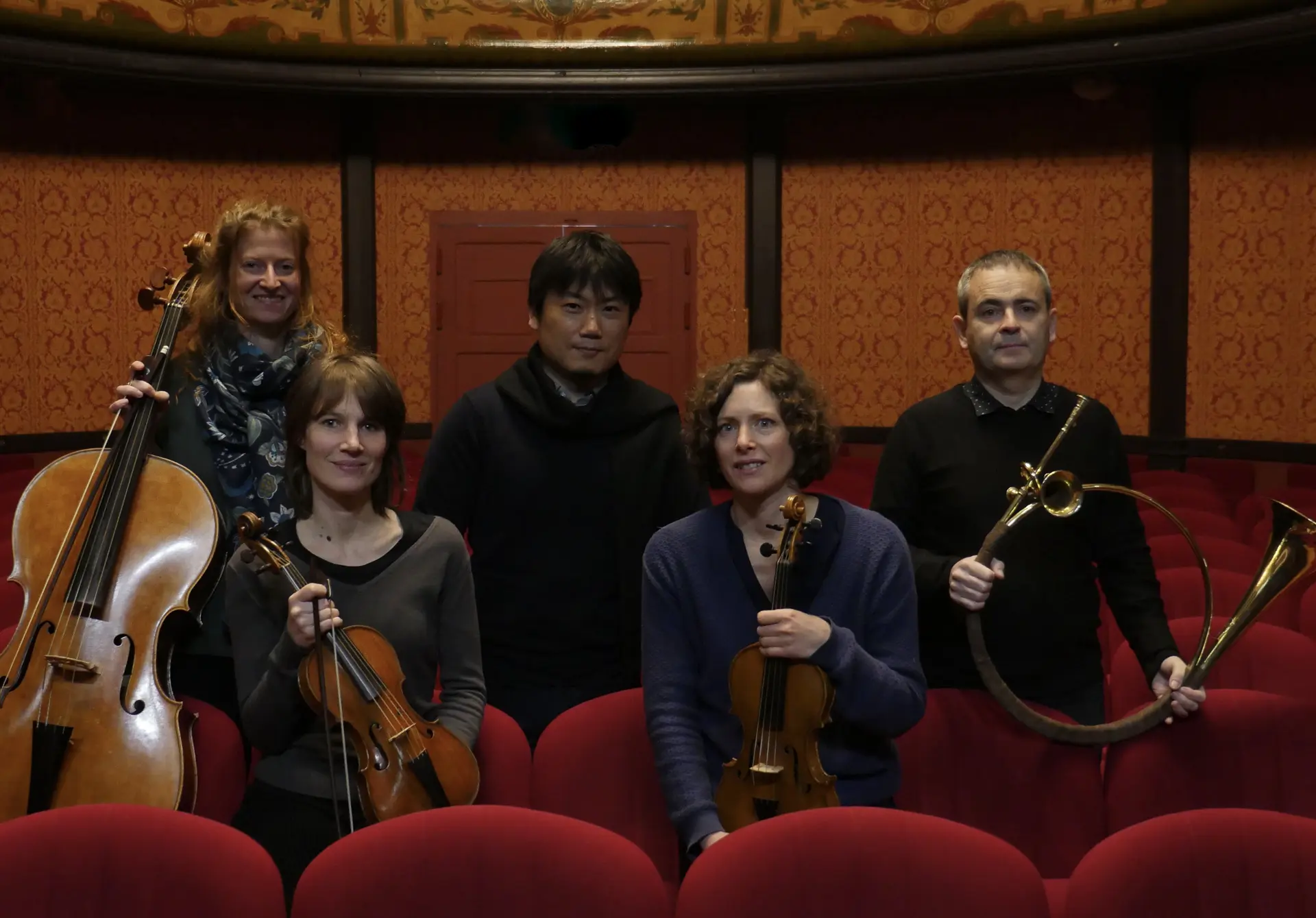
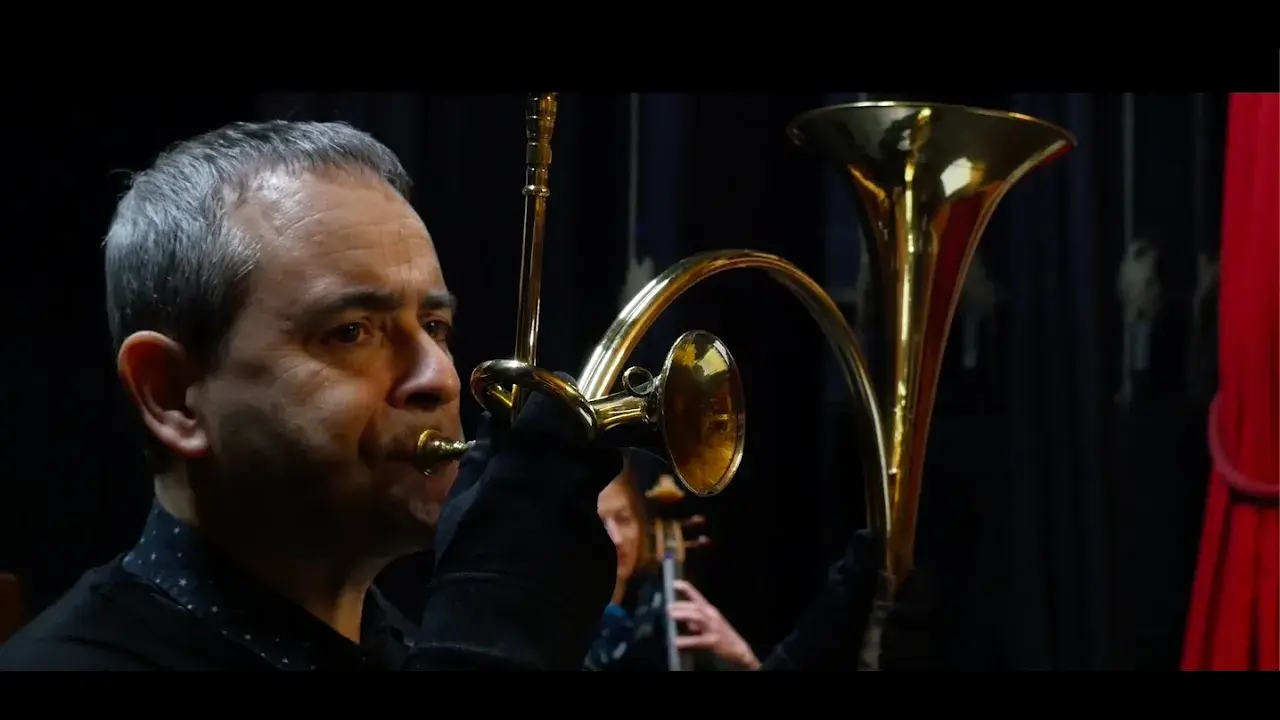
Alice Julien-Laferrière and her ensemble Artifices, in residence in Les Maranges, will be evoking the heyday of horse-drawn post, with soloist Jean-François Madeuf playing the postilion and hunting horn.
This programme features instrumental music based around the postillion horn, including Johann Beer's Concerto a 4, which alternates solo parts on the postillion horn and hunting horn, played by the same instrumentalist! The fact that the same musician alternates playing on two different instruments is a unique practice and a spectacular technical feat not to be missed!
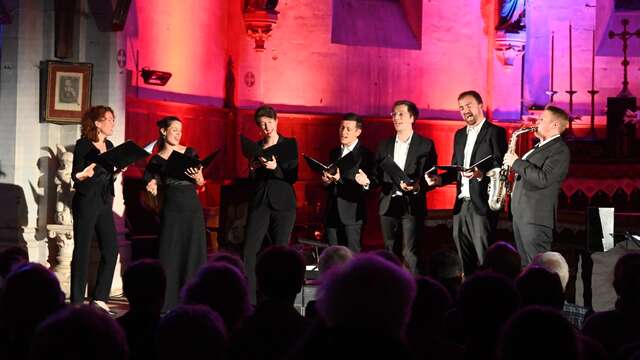
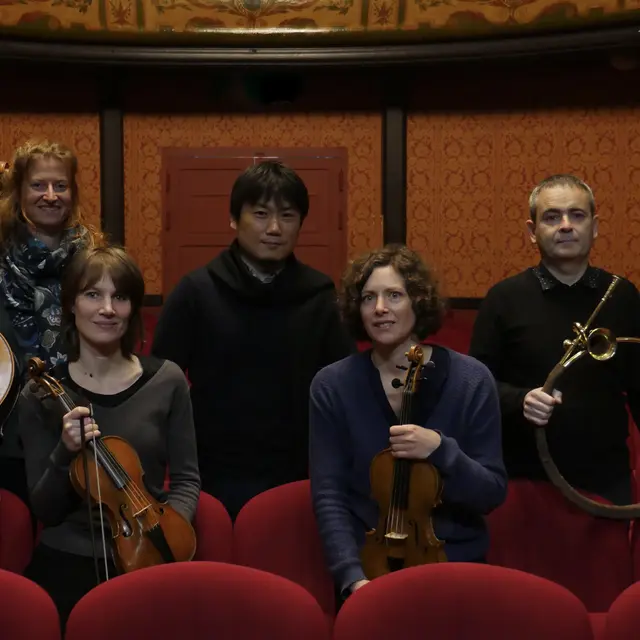
Ensemble Artifices will feature Alice Julien-Laferrière and Yoko Kawakubo on violin, Cécile Vérolles on cello and Kazuya Gunji on harpsichord. It offers a completely new version of this concerto, on instruments rebuilt for the occasion. This is also an opportunity to hear Jean-François Madeuf in a trumpet concerto by Telemann, as well as the Italian violin virtuoso in a sonata by Veracini, and some very fine pages by Bach in an instrumental version of the Caprice pour le départ de mon frère bien-aimé.
The postillion horn was the instrument of the heyday of the post office, of letter-writing and mail-coach travel. This little instrument, which plays only two notes, was nothing less than the symbol of the European unity of the Holy German Empire in the 17th and 18th centuries, and is still the emblem of the post office in many European countries today!
Its bell rang out across the continent and inspired the greatest composers of the 18th century: Bach, Vivaldi, Händel, Telemann, Veracini, Endler... Johann Beer even made it a solo instrument in his unusual concerto for postillion horn and hunting horn, and we find it tuned in two different keys in the central aria of Johann Samuel Endler's cantata Le Montreur de curiosités!
But who has heard it sound today? Yet this instrument is still the symbol of the post offices of Germany, Poland, Austria, Slovenia, Lithuania, Spain, Croatia, Bulgaria, Belarus and the Czech Republic! It has been at the heart of political quarrels that have caused a great deal of ink to flow, and we would be tempted to say that it constitutes a sound heritage of humanity - Goethe, Lenau and Kierkegaard all mentioned its sound in their literary and philosophical works.
Curiously, there are very few postilion horns left today, despite the daily use to which they were put at the time: so we had to rebuild some to hear them ring! In collaboration with the Musée de la Poste, two postillion horns saw the light of day in Bourges in 2020, in the workshop of Patrick Fraize, a specialist maker of antique instruments. They are based on an instrument in the Wallace Collection in London.
This programme features instrumental music based around the postillion horn, including Johann Beer's Concerto a 4, which alternates solo parts on the postillion horn and hunting horn, played by the same instrumentalist! The fact that the same musician alternates playing on two different instruments is a unique practice and a spectacular technical feat not to be missed!
Ensemble Artifices will feature Alice Julien-Laferrière and Yoko Kawakubo on violin, Cécile Vérolles on cello and Kazuya Gunji on harpsichord. It offers a completely new version of this concerto, on instruments rebuilt for the occasion. This is also an opportunity to hear Jean-François Madeuf in a trumpet concerto by Telemann, as well as the Italian violin virtuoso in a sonata by Veracini, and some very fine pages by Bach in an instrumental version of the Caprice pour le départ de mon frère bien-aimé.
The postillion horn was the instrument of the heyday of the post office, of letter-writing and mail-coach travel. This little instrument, which plays only two notes, was nothing less than the symbol of the European unity of the Holy German Empire in the 17th and 18th centuries, and is still the emblem of the post office in many European countries today!
Its bell rang out across the continent and inspired the greatest composers of the 18th century: Bach, Vivaldi, Händel, Telemann, Veracini, Endler... Johann Beer even made it a solo instrument in his unusual concerto for postillion horn and hunting horn, and we find it tuned in two different keys in the central aria of Johann Samuel Endler's cantata Le Montreur de curiosités!
But who has heard it sound today? Yet this instrument is still the symbol of the post offices of Germany, Poland, Austria, Slovenia, Lithuania, Spain, Croatia, Bulgaria, Belarus and the Czech Republic! It has been at the heart of political quarrels that have caused a great deal of ink to flow, and we would be tempted to say that it constitutes a sound heritage of humanity - Goethe, Lenau and Kierkegaard all mentioned its sound in their literary and philosophical works.
Curiously, there are very few postilion horns left today, despite the daily use to which they were put at the time: so we had to rebuild some to hear them ring! In collaboration with the Musée de la Poste, two postillion horns saw the light of day in Bourges in 2020, in the workshop of Patrick Fraize, a specialist maker of antique instruments. They are based on an instrument in the Wallace Collection in London.
Rates
Base rate
€20.00
Base rate
€18.50
Subscriber's rate
€77.00
Free
Free
Payment methods
 Cheques and postal orders
 Cash
CashOpening times
On 2 May 2026
- 20:00 at 21:30
Medias
youtube![youtube]() Missing video caption
Missing video caption
Location
Contact Mai Musical de Meursault - Concert Ensemble Artifices : "Sonne, sonne, cor du postillon"