The Tourisme & Handicap label, supported by Atout France, is a national scheme designed to guarantee a high-quality welcome and services that are genuinely accessible to people with disabilities.
 Annie Spratt A2bvxvd5qgo Unsplash 1
Tourism and DisabilityTourism accessible to all
 Tourism and Disability Label
The Tourism and Disability mark
It is based on a dual ambition:
- To provide tourists with clear, reliable and verifiedinformationon the level of accessibility of establishments, while ensuring that their experience is tailored to their needs.
- To support tourism professionals in improving their infrastructure, reception facilities and services to make them fully inclusive.
Tourism and Disability
In France, almost 18% of the population is disabled, not counting people with reduced mobility. Worldwide, more than a billion people have specific accessibility needs. Obtaining the Tourisme & Handicap label is much more than a simple certification: it’s a real opening to a diversified and loyal clientele looking for adapted, high-quality services. By committing to this approach, you are also embracing the values of responsible, inclusive and sustainable tourism, while setting yourself apart in an increasingly competitive tourism sector. This label is official recognition of the quality and commitment of our services, and a call to move forward together towards more inclusive, attractive and humane tourism.
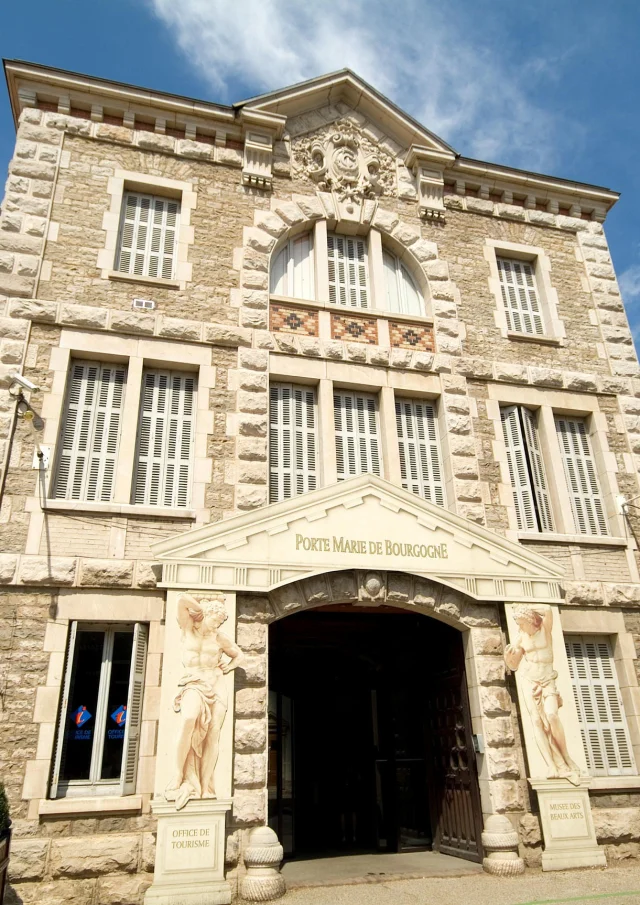
The Tourist Office has embarked on a certification process to make all its facilities and services accessible. Our mission is to offer every visitor an inclusive, comfortable experience that respects their needs. To date, the tourist information office at Porte Marie de Bourgogne in Beaune has been awarded the Tourisme & Handicap label for hearing and motor disabilities. Our other information offices are in the process of obtaining this accreditation.
 Th logo
 P1095603
There are many different types of disability, some of which are invisible, making awareness and adaptation all the more essential. There are four main types of disability:
- Motor disability, which concerns difficulties with mobility or motor skills,
- Visual disability, which affects vision, ranging from visual impairment to blindness,
- Hearing impairment, which covers hearing problems ranging from partial to total deafness,
- Mental and cognitive disabilities, which include intellectual limitations and cognitive or psychological disorders that affect the ability to understand, communicate or adapt.
These different types of disability require specific adaptations to ensure equal access to all tourist services and venues.
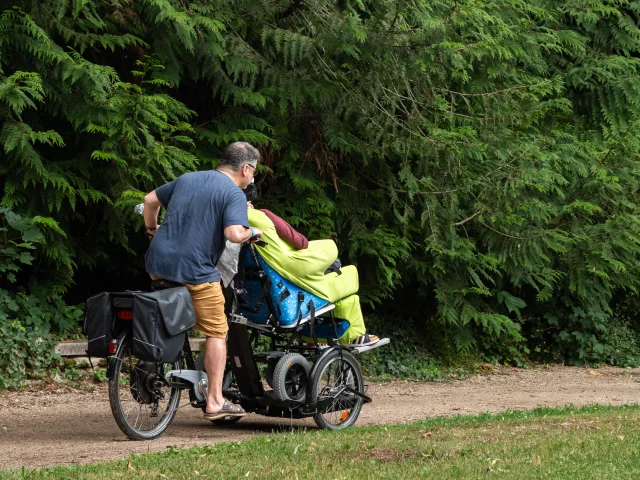
- Motor disabilities: facilitating access for people with reduced mobility through facilities such as ramps, lifts and adapted toilets.
- Visual disability: equipment and signage designed for the visually impaired, including, for example, strong colour contrasts, information in Braille and special lighting.
- Hearing impairment: installation of magnetic loops and provision of written transcriptions of audio information.
- Mental and cognitive disabilities: simplification of routes, clear and intuitive signage, adapted devices, and provision of FALC (easy to read and understand) materials.
 1596114138 307945003 1024x256 1
FAQ about the Tourism and Disability label
- Who is eligible for the label?
The “ Tourism and Disability ” label is open to a wide range of players in the tourism sector, including
- Accommodation (hotels, gîtes, campsites, holiday villages, etc.)
- Restaurants and cafés
- Cultural and heritage sites
- Leisure activities and natural areas
- Tourist offices and information centres
- What are the requirements for certification?
To be awarded the ” Tourisme & Handicap ” label, you must meet the following criteria for at least two of the four categories of disability (hearing, mental, motor and visual):
- Comply with the regulatory requirements relating to your activity.
- For each type of disability covered by the label application:
- Comply with all the mandatory criteria in the guidelines.
- At least 75% success rate in terms of comfort of use.
Compliance with the first point is certified by a declaration on the applicant’s honour, while compliance with the comfort of use criteria is verified during the assessment.
- What is the assessment process?
The assessment is carried out by a pair of assessors made up of a representative of the tourism sector and a representative of disability associations, covering all types of disability (physical, sensory, cognitive, mental or psychological). For renewal applications, if the pairing cannot be made up, the assessment may be carried out by only one of the two assessors. If there is no local branch, or if the Destination d’Excellence and Tourisme & Handicap labels are being applied for at the same time, the assessment will be carried out by an assessment body approved by Atout France.
- Is the label permanent or renewable?
It is awarded for a maximum of five years, renewable after verification that the reception and accessibility criteria have been maintained.
- Do we need to respond to all 4 types of disability?
At best, yes. However, the label is awarded if you comply with at least two types of disability. As a reminder, there are four types of disability: motor, visual, hearing, mental and cognitive.
- What are the resources?
Below you’ll find resources to help you find out more about the label or get started on the process of obtaining it, to make tourism more accessible. For more information: [email protected]
- The Tourisme et Handicap label – Atout France
- The Tourisme et Handicap document
- The Tourisme et Handicapself-assessment tool
- The certification procedure
- The National Label Management Committee (CNGL )
- Local contacts
- Assessment bodies
- Standards